How The Hindu Epic Ramayana Somehow Led me to Zagreb
While growing up in India as a child, I watched the ancient Hindu epic Ramayana being played once a week on our television — a television that had only one channel. It also heavily depended on electricity, and on the long bamboo pole outside, with antennas fixed at the top.
The dodgy VFX and the lengthy commercial breaks — which, if removed, would probably reduce the one-hour show to just thirty minutes — never dampened my mood. The story of Ramayana is truly epic and fascinating.
It had the character of Hanuman, a humanoid-ape deity who could carry an entire mountain with magical herbs in one hand and fly across the sky. There was Rama, the exiled prince and embodiment of duty and righteousness. And there was Ravana, the ten-headed demon king of Lanka.
The early morning Croatia Airlines flight to Zagreb from Dubrovnik had nothing to do with Ramayana — at least not directly. But the way “Zagreb” sounded to me had everything to do with it, much like my earlier motivation for visiting Dubrovnik.
I had first come across the name Zagreb long ago in one of my general knowledge classes in school, where we had to memorise countries and their capitals. I didn’t know anything about Croatia and its capital, but the name “Zagreb” stayed with me.
Every time I said “Zagreb” out loud, my brain found a strange rhyming similarity with the sound of “Sugreev,” the son of Surya, the sun god in Hindu mythology, and someone who was always protected by Hanuman in Ramayana.
As a child, that was enough connection for me.
In addition, I was also strangely fascinated by the names of places that started with the last letter of the English alphabet. I felt those places would be amazing.
I never thought I would actually be lucky enough to visit one someday.
My fondness for Croatia probably started around then, but it went dormant for a long time — until the 2018 FIFA World Cup.
That’s when I heard the name Luka Modrić for the first time.
His face was all over the newspapers — not just because of how instrumental he was in taking Croatia to the final, but because of his struggles growing up during the Croatian War of Independence between 1991 and 1995. Losing family, growing up in difficult conditions, and still rising to the very top of world football — it stayed with me. Not as some dramatic lesson, but as a reminder that circumstances don’t always define where you end up.
“Zagreb,” “Sugreev,” and later “Modrić” — somehow all of them stayed connected in my mind — and became my motivation to visit this place.
————————
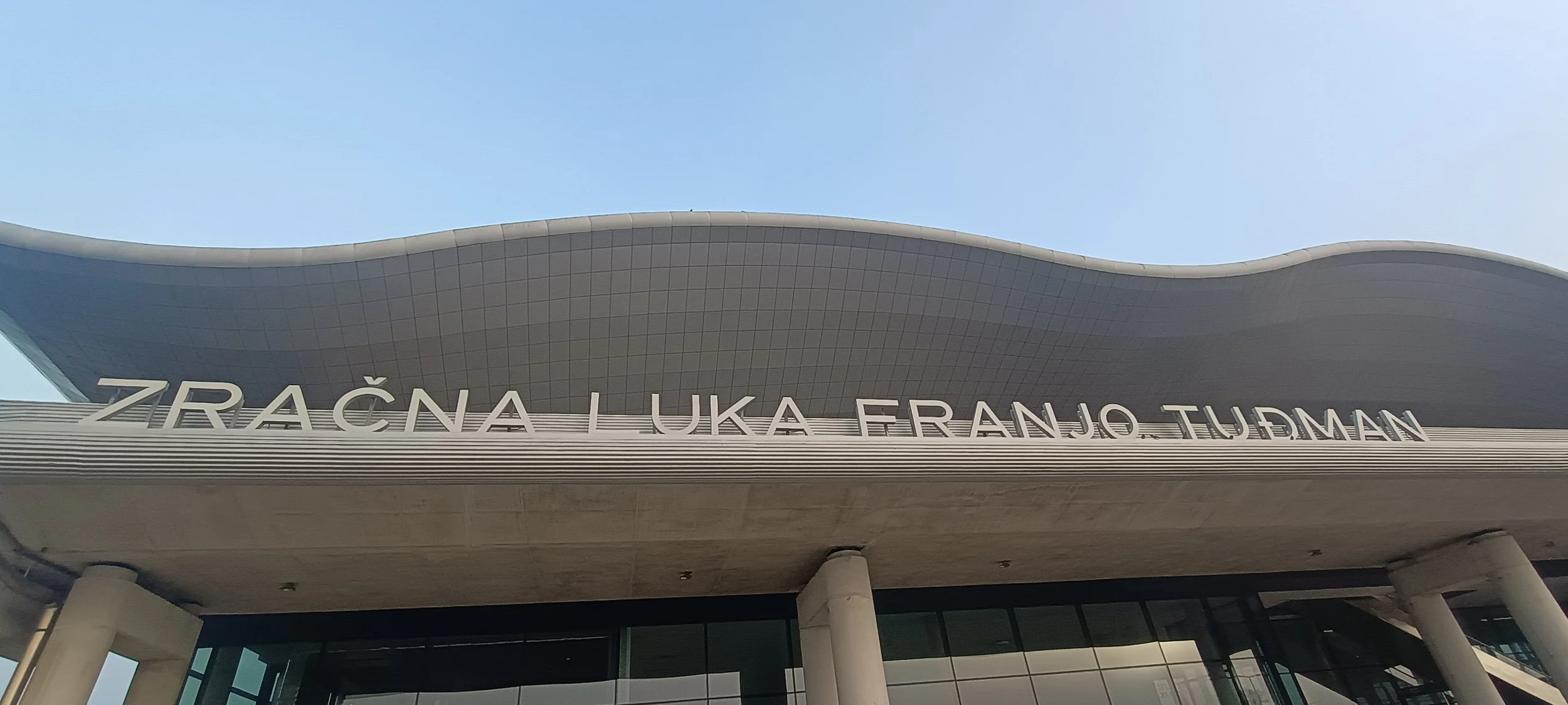
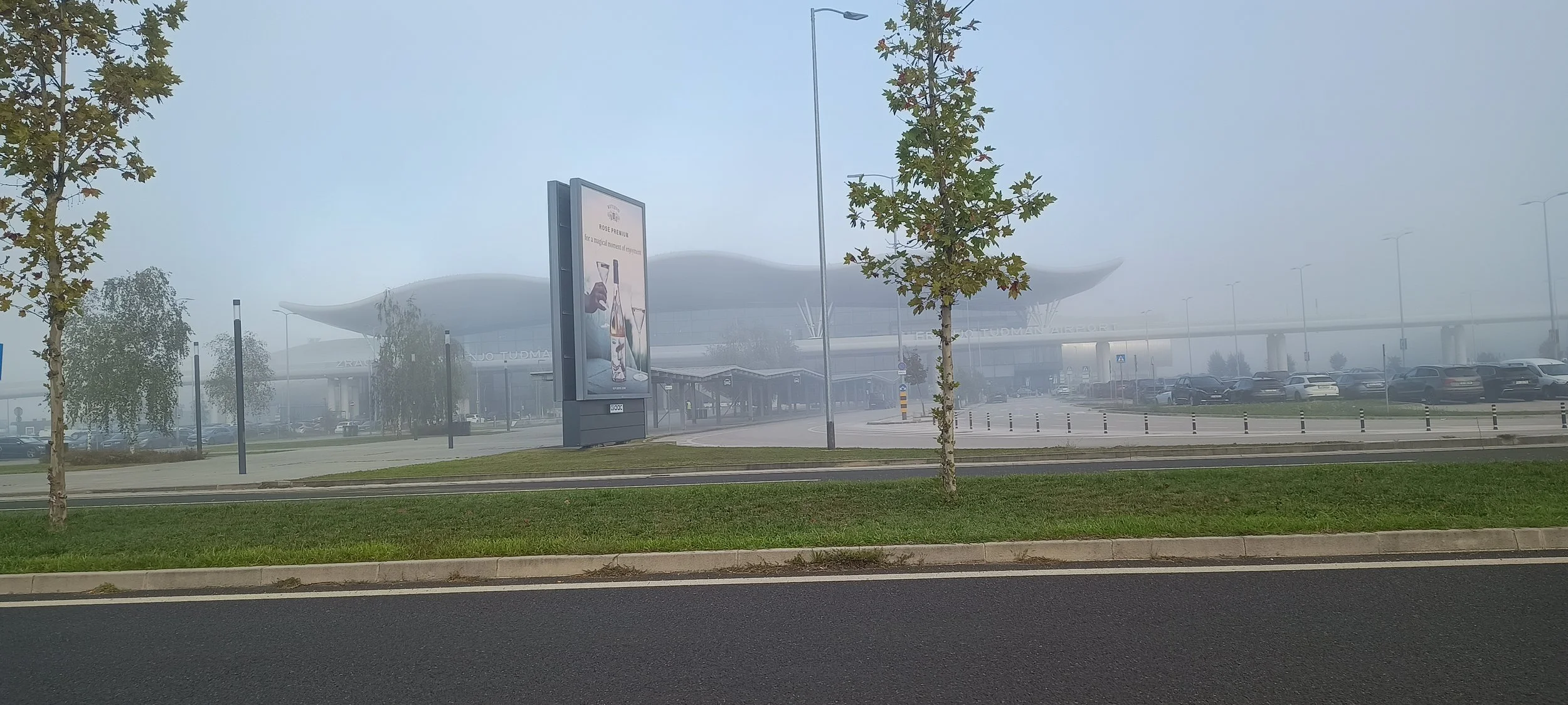
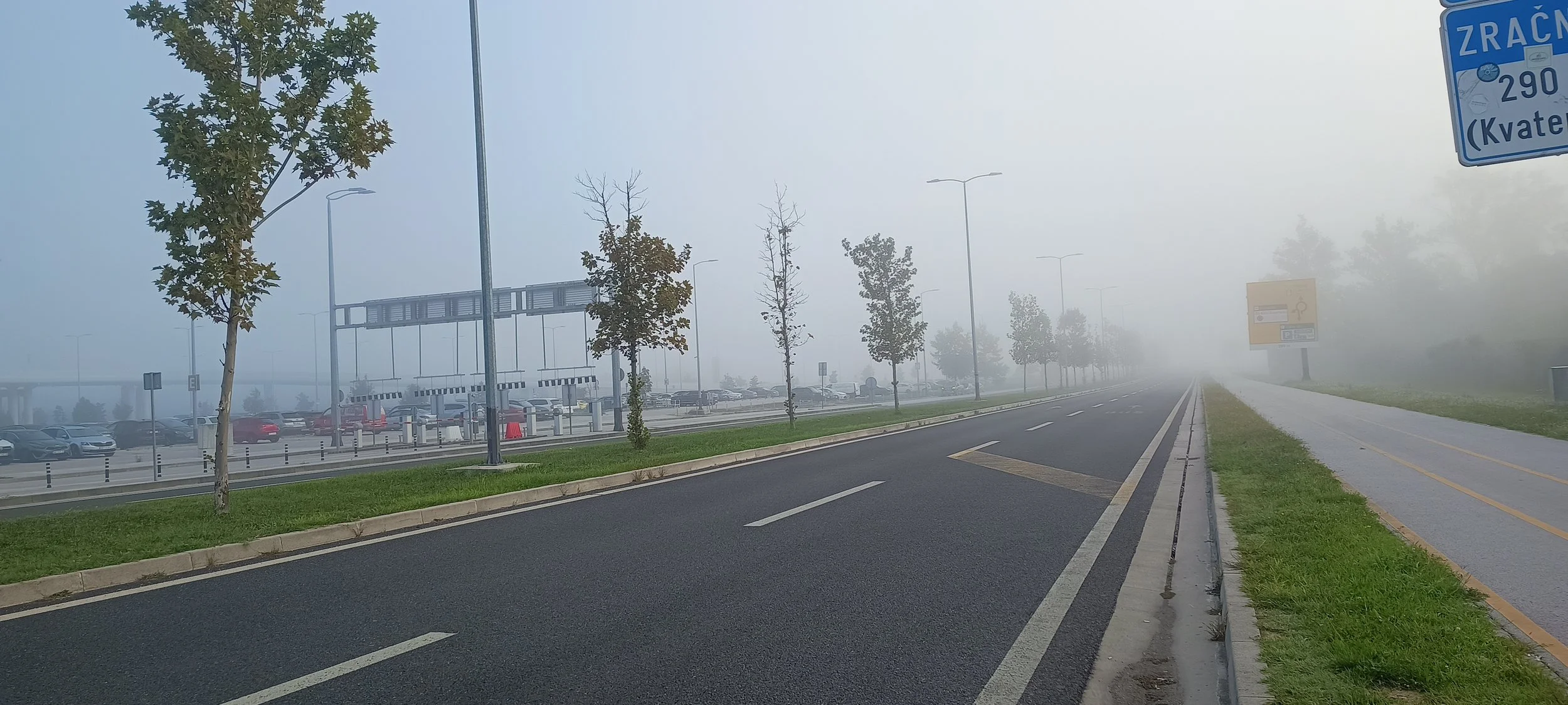
The Franjo Tuđman Airport was still covered with a thick blanket of fog when I exited after a short sixty-minute flight. I quickly took a snap of the airport for my memory and started walking, following what I thought would lead me to a bus stop.
Midway through my walk, I looked back and realised no one was taking the same route as I was.
“Have I taken the wrong path?” I thought.
I stopped, opened Google Maps, and entered Seven Stories Rooms, which would be my stay for the night in Zagreb. The map showed buses 290 and 268 as my only options, along with a tram connection.
So I continued walking toward the bus stop it suggested.
At the stop, there was a route map that confused me like no other. I still somehow convinced myself — not very confidently — that this was where the 290 buses stopped.
Google had said I should take the 290 to Kvaternikov trg, then walk six minutes to Tržnica Kvatrić, and from there take tram number 13 to my final stop.
As if the confusion I was already feeling wasn’t enough, I now had to try and read out these names written using Gaj’s Latin alphabet — full of diacritics and unfamiliar letter combinations. It looked beautiful, no doubt — almost stylish — but for someone like me, who had never seen such combinations before, even attempting to pronounce them felt like a challenge I was clearly not winning.
Then I noticed a few people with their luggage crossing the road to a bus stop on the other side, while I was still standing alone at mine.
My confidence started to fade sooner than a phone battery on 1%, and that was enough.
I mustered some courage and walked up to an elderly man nearby who was sweeping the kerb and putting rubbish into a bin. He confirmed what I had already started to suspect — the 290 bus would not stop here.
It would stop at the other side.
I thanked him and walked hurriedly towards the other stop, throwing my earlier “confidence” into the same bin he was using.
————————
After about 15 minutes, a blue articulated bus with “290” displayed on the top finally arrived. I had already kept 53 cents ready in my pocket for the fare.
But when I offered it to the driver — a heavily built elderly man with short grey hair — he simply gestured with his hand as if to say, “Just go inside, it’s fine.”
After a couple of awkward attempts from my side to still offer the money, I gave up and walked in.
I noticed that other commuters were also not paying anything.
And that’s when a new kind of problem started.
Should I be happy… or nervous?
Because on one hand, it felt like a free ride; on the other, fare evasion. What if a ticket inspector got in later and asked for proof?
A quick Google search didn’t clearly say that public transport was free.
So for the next hour, what should have been a relaxed ride into a new city turned into something else entirely — a mix of silent panic and constant scanning.
Every time the bus stopped, I looked around for anyone who looked like an “officer.”
At one stop, two men in some sort of matching uniform got in.
My heart didn’t just move to my mouth — it jumped out of the bus and left me there to deal with the situation alone.
They greeted the driver and walked past me.
I didn’t move. I just prayed for my stop to arrive soon.
I didn’t turn back either. Not until I reached Kvaternikov trg.
I quickly got off the bus and walked away from the stop faster than necessary, continuing until I reached Tržnica Kvatrić.
I finally turned back, just to make sure those two men weren’t following me.
Relief. Or so I thought.
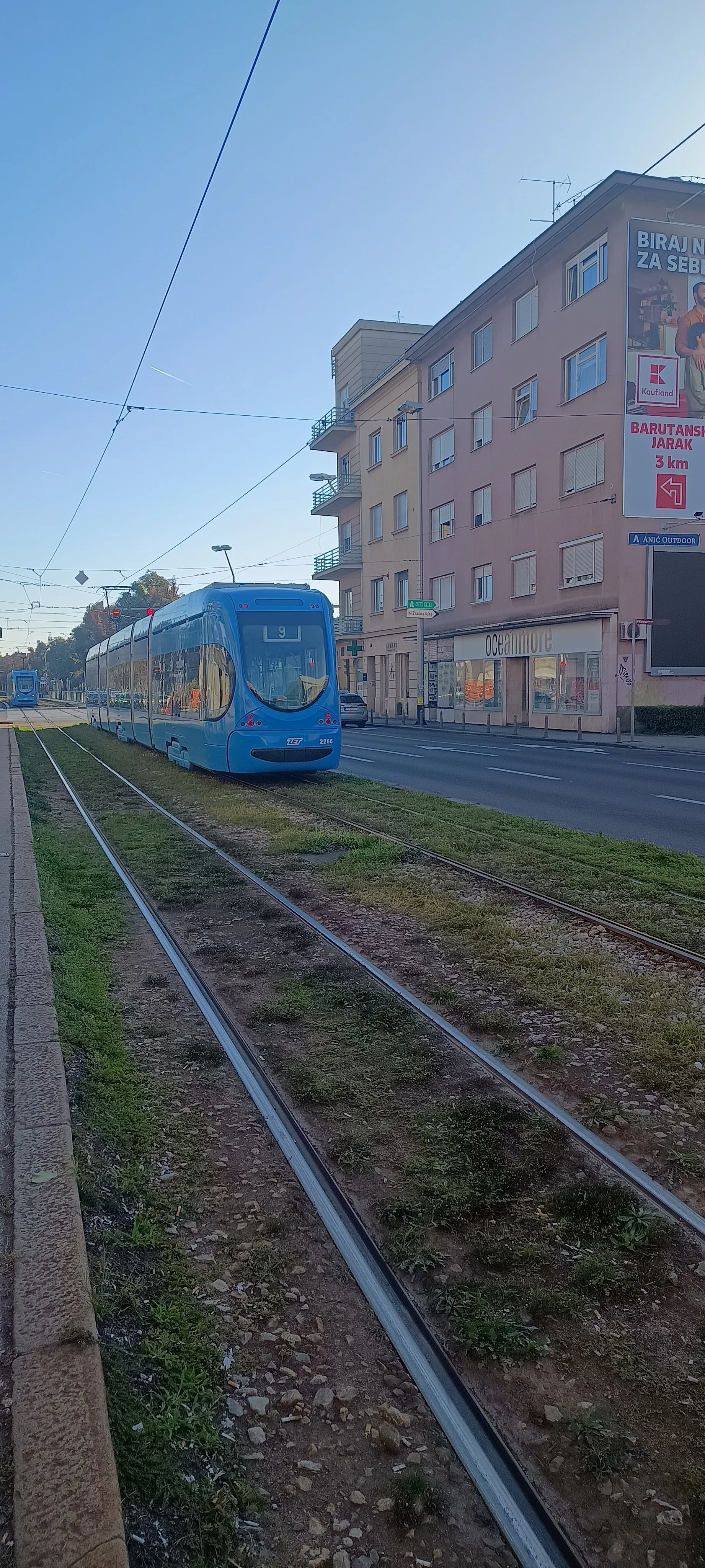
Within a few minutes, the number 13 tram slowly entered the stop.
And just like that, the same problem again.
I couldn’t figure out how to pay here either.
I started my quiet surveillance once more — inside and outside — looking for anyone who might ask me for a ticket.
Luckily, it was just two stops to my final destination.
The moment I stepped off the tram, I saw my heart — which had clearly taken its own route earlier — come back to me.
This time, it was actual relief.
Some of the names of the stops I saw along the way stayed with me — Žitnjačka, Črnkovečka, Trg žrtava fašizma. Beautiful to look at. But almost impossible for me to pronounce properly.
And maybe that was the point.
Everything here — the language, the system, even the small everyday interactions — was different from what I was used to. And yet, nothing felt unwelcoming.
If anything, it made me realise how much there is to learn when you step outside your own world.
Not just about a new place — but about yourself.
About how quickly confidence can turn into confusion. About how easily you can feel lost when the familiar disappears. You don’t always understand everything when you travel.
But maybe you don’t have to.